

Threaded Resistance, Part V: The Collar and the Mirror
On who sets the rules for professionalism, and why it so often smells like power, dust, and denial

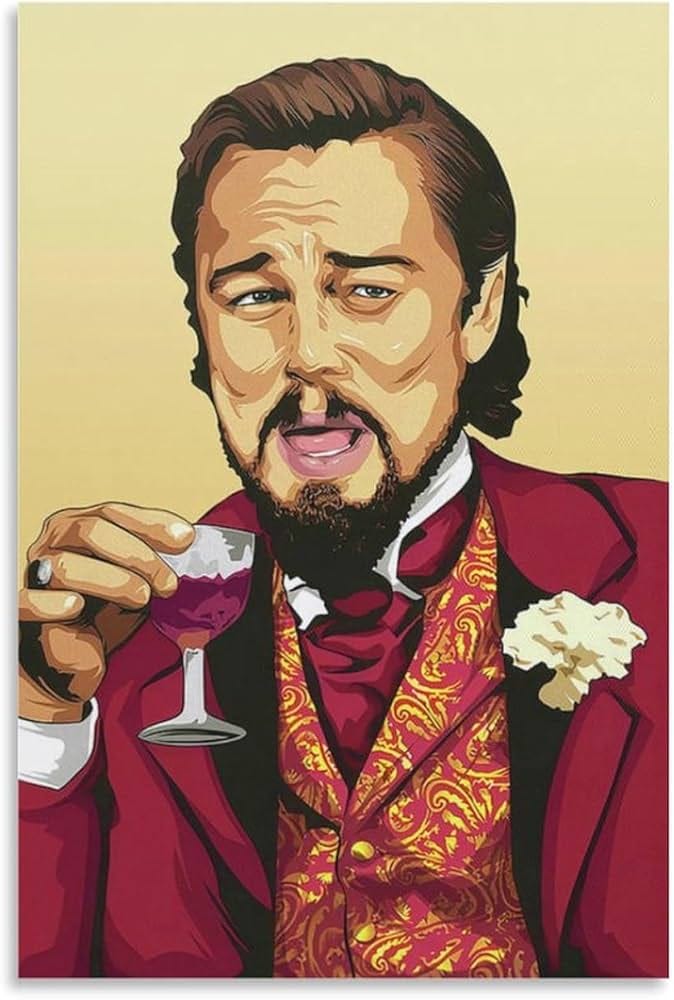
There’s a certain kind of man who believes a collar absolves him. You’ve seen him. The one who wears a sport coat that doesn’t quite fit his shoulders, a tie that sits crooked like it’s apologizing for being there, shoes that haven’t seen polish since the Obama administration. He walks through office hallways believing his reflection has been pre-approved. The collar, creased or not, becomes his crown.
He who holds the collar, holds the power of judgment.
I’ve worked in places where the most poorly dressed men seemed to hold the most authority over what others should wear. It’s a strange inheritance, this idea that neatness equals professionalism, that a collared shirt can sanctify the wearer. These men are not arbiters of taste or substance; they are simply beneficiaries of a system that confuses conformity with credibility.
And yet, these are the same men whose shoes squeak with the ghosts of old ideals, men who mistake starch for structure, who avoid mirrors because somewhere deep down, they know that reflection has less to do with light and more to do with honesty.
I’ve always believed that the mirror doesn’t lie; it only reflects what we’ve refused to face.
Years ago, a colleague of mine, told me about her supervisor, a man who had taken it upon himself to “advise” her on how to dress more professionally. The way she said “advise” carried a tremor, a sigh stitched with restraint.
“He said I should wear something more fitted and professional,” she told me, eyes lowered not in shame, but exhaustion.
She wasn’t looking for my approval, just a place to set her discomfort down. Her voice trembled the way voices do when they are tired of being polite.
The irony was so thick I could’ve hung my coat on it.
This man, her superior, was not what you’d call a dresser. His suits were wrinkled, his shoes dull. He lived in the same aesthetic philosophy many men do: as long as it has a collar, it must be professional. That was his creed, his unspoken theology of mediocrity.
And yet here he was, standing before a mirror he refused to look into, critiquing a woman who did.
There’s something deeply unsettling about how easily men inherit the right to judge presentation. I’ve sat in rooms where “professionalism” became code for policing women’s clothing. Where the table, all men, mostly middle-aged, mostly unaware of their own reflection, debated the hemline of a skirt as if it were a national security issue.
I’ve heard the phrases:
“She should tone it down.”
“That dress is a bit too much.”
“She’s got to be careful—people might get the wrong idea.”
What they never said out loud, but what hummed beneath every word was that professionalism, in their view, had a body type. That how much fabric you were allowed to wear or show depended on how much of you they found acceptable.
And when I asked, quietly, “Are these recommendations fashion or fetish? Preference or protocol?”
The room fell silent.
Because to ask that question is to ask them to confront something more dangerous than impropriety—it’s to ask them to confront themselves.
You start to notice that many of these men, the ones who hold the collar close like scripture, are terrified of mirrors. Not just the ones in bathrooms or hallways, but the ones held up by women who refuse to shrink under their gaze.
These men avoid mirrors because mirrors tell the truth: that their authority was not earned through style, substance, or grace, but inherited through a lineage of comfort. They avoid mirrors because mirrors are not impressed by collars.
I’ve seen it happen—how a woman, elegant and assured, walks into a room and shifts its gravity. And how quickly that shift is met with commentary disguised as “concern.”
When women wear confidence, men often mistake it for chaos.
Professionalism, as it’s often defined, is not about the work, as much as it’s about the presentation of work, the performance of order. It’s about who gets to decide that your body, your culture, your fabric, is too loud for the space they’ve deemed silent.
Once, at a previous job, a manager told me my Harriet Tubman shirt was “too political.” I told her Harriet wasn’t running for office—she was running for freedom.
And that’s the difference. Freedom doesn’t ask for approval.
The same holds true for the women who walk through office doors carrying both their ambition and their self-expression. The ones who have to calculate how their attire might be interpreted through the fragile lens of male comfort.
Men are allowed to arrive disheveled and still be seen as leaders.
Women arrive polished and are seen as performing.
Black women arrive anywhere, and the room starts measuring.
There’s a kind of violence in that. The kind that doesn’t always bruise the skin but bruises the spirit.
Because when the same men who can’t match their socks or iron their shirts are the ones setting the standard, you start to realize that “professional” is often just another word for “palatable.” And palatable, in their dictionary, means non-threatening, non-distracting, non-you.
I’ve watched brilliant women adjust their sleeves, tug at skirts, question their reflection, not because they doubted themselves, but because the room made them doubt the mirror.
Meanwhile, the men at the table loosened their collars, unbuttoned their hypocrisy, and congratulated themselves for upholding the “standard.”
It’s always been about power. The collar was never about cleanliness or care—it was about control.
The collar says, “I am above.”
The mirror says, “You are seen.”
And these two forces have been in quiet war since the beginning of every workplace that mistook patriarchy for policy.
I’ve come to believe that resistance is not always loud. Sometimes, it’s as quiet as a woman deciding to wear what makes her feel like herself, no matter how many collars turn. Sometimes it’s a man like me, sitting at the table and asking the question that makes the room uncomfortable.
Who sets the rules for clothing?
And why do they always look like they’ve never looked in a mirror?
In my own life, I’ve learned that the mirror is the truest wardrobe consultant. It doesn’t care for brands or buttons. It asks only for honesty.
There are days I still adjust my collar before stepping into certain rooms. But the difference now is that I do it for myself—not for their comfort, not for their approval. I do it because the collar should serve the mirror, not the other way around.
Threaded resistance, for me, has always been about that quiet refusal—to accept that the measure of professionalism lies in conformity rather than conviction.
Because style, at its core, is not decoration. It’s declaration.
And those who fear the mirror will never understand that what we wear is not simply fabric—it’s faith stitched into form.
Liner Note:
Sometimes I think the greatest act of rebellion is to look in the mirror and decide you’re enough before anyone else gets to weigh in. To realize that collars, codes, and conventions were all stitched by people who couldn’t bear to see themselves unadorned. The mirror, though—it holds no bias, no hierarchy. It only offers truth. And maybe, in a world obsessed with collars, truth is the most stylish thing we can wear.